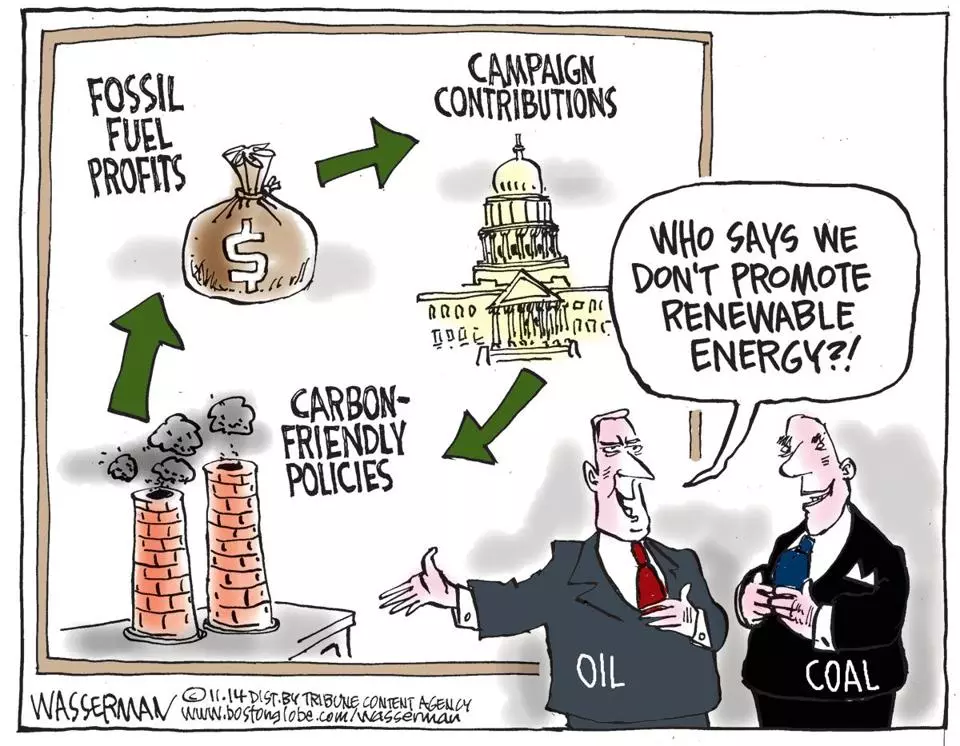
A couple of weeks ago on the golf course, (where so many intriguing intellectual discussions occur), we were suffering through an unseasonably cool late May morning, and one of my companions trotted out the oft-heard complaint that global warming wasn’t living up to its billing. I knew he was joking, but being the pedantic asshole that I am, I had to step in and inform him that the proper term now is climate change. Although global warming is a thing, (and getting to be more and more of a thing,) it’s the chaotic instability of climate – the generation of extremes of heat, cold, rainfall, drought, winds – that really marks how things are different from 50 years ago.
Then I went home and thought about that. I thought about climate as opposed to weather. If you think of climate as the normal and predictable range of weather conditions in a given part of the world, what is it that keeps seasonal weather stable and predictable and why do they now seem to be becoming unstable and chaotic? Let’s think about the big drivers of weather.
Let’s talk about the oceans first. The Atlantic Ocean has the Gulf Stream which takes energy from the Gulf of MEXICO (Piss off Donald!) and deposits it along the west coast of Europe. The gulf stream (the extension running past England is known as the North Atlantic Drift) is why it’s possible to grow palm trees in the south of England which lies about 5 degrees of latitude north of Port Elgin, Ontario. Notice that we don’t grow many palm trees here.
Major oceanic currents are driven largely by two phenomena. The first is the surface wind conditions, and the second is “thermohaline circulation” – the density differences in water caused by temperature effects and salinity differences. In this case the critical issue appears to be salinity. The Greenland ice sheet is melting, to the tune of 270 billion metric tons of ice annually. All that fresh water is less dense than ocean brine, which prevents it from sinking. That causes flow resistance to the Gulf stream/North Atlantic drift system. Monitoring suggests that as a result, the Gulf Stream system is slowing down – the current isn’t as strong as it has been historically, and it is developing instability. Comprehensive physical climate modelling, published in peer reviewed oceanographic journals warns that a collapse of the Gulf Stream system could decrease temperatures in Europe by 3 to 8 degrees, could cause catastrophic droughts in sub-Saharan Africa, and could drive a sea-level rise of 0.5 to 1 meter along the eastern seaboard of North America.
In the Pacific there are a couple of big currents. The first is a Gulf Stream analogue called the Kuroshio current. It flows north past Taiwan and Japan, transporting heat north from the tropics. This current has a historic path but is occasionally bounced off it’s normal course by an enormous cold water eddy that develops in the Pacific. When that happens, oceanographers refer to it as the Kuroshio meander – the current is still operating but has meandered away from its normal path. The Kuroshio meander normally causes a short term seasonal impact, something like the El Nino which we’ll get to in due course. However, in 2017 the Kuroshio current got knocked off its normal path and failed to return until very recently because it was locked in place by a particularly massive and enduring cold-water eddy. The duration of this “meander”, at 7 years 9 months is unprecedented in more than a century of monitoring. The meander brought warm water from the tropics into the Sea of Japan which added intensity to typhoons hitting coastal Asia. The warm waters killed off some kelp forests and threatens the habitat of some fishery species like abalone. Elsewhere in the parts of the ocean that formerly were part of the Kuroshio current, the water became much colder than normal which “completely blocked the migration of traditional commercial fish, altering catches across the regional seafood industry for nearly a decade.” Oceanographers now consider the Kuroshio current to be unstable.
The other major Pacific Ocean current is the Humboldt current which runs up the west coast of Peru. This current is still stable, although “vulnerable” to disruptions of its biological activity by heatwaves affecting the chilled core of the current.
Perhaps the most worrisome ocean effect is the Antarctic Circumpolar Current (ACC). This absolutely huge current flows around the south pole, and effectively links the South Atlantic, the South Pacific and Indian Oceans. It carries more than 100 times the total water flow in all the world’s rivers combined. It’s getting faster, to the tune of 1-2% per decade since 1990. And also, it’s getting warmer, at about 0.1 to 0.2 degrees per decade. It is estimated that the southern ocean has absorbed between 60% and 90% of all the excess heat stored in the oceans since global warming began. The ACC flows underneath the Antarctic ice shelves and glaciers. It thus acts as an energy transfer mechanism causing greatly increased melting of the ice shelves. The long term consequences could be 1) random visits from large floating ice sheets (mammoth icebergs) and 2) dramatic sea-level increases.
In addition to those major long-term currents, there is the famous El Nino/La Nina pairing known as the El Nino Southern Oscillation (ENSO). These are not independent currents, but opposite phases of an oscillating pattern. During the normal or La Nina condition, trade winds push warm water towards Asia and Australia. El Nino happens when this warm water reverses flow and moves back towards South America like a wave sloshing backwards in your bathtub. The system oscillates from La Nina to neutral to El Nino in a cycle that runs somewhere between 2 and 7 years. In the El Nino phase, warm nutrient-poor water piles up along the coast of Peru triggering more aggressive storms coming off the west coast of the Americas.
Over the past quarter century, the ENSO has become more difficult to predict. Global warming is increasing surface water temperatures, which alters the nature of the currents. This more volatile ENSO triggers more severe droughts, floods, and wildfire conditions across the Americas, Africa, and Australia.
Things aren’t much better when we look at atmospheric flows. The Polar jet stream is a high velocity very cold air current some five to seven miles up. The jet stream has become highly unstable – it assumes a flow pattern that wasn’t seen historically, and it sometimes gets locked in extreme north south loops. Where the jet stream dips south the weather may be unseasonable cold for extended periods, and where the jet stream is bent high (north) the weather may be unusually warm and dry – think drought and wildfires.
Above the polar jet stream sits the stratospheric polar vortex, which is “A massive, semi-permanent ring of ultra-fast westerly winds encircling the poles during winter in the stratosphere (10–30 miles up), trapping freezing air over the poles.” Occasionally, and with increasing frequency over the past twenty-five years, upward rising warm air collides with the polar vortex which can send it spinning off course. Very cold air spilling out of the fractured polar vortex causes extreme deep-freeze winter weather anomalies in North America, Europe and East Asia
At lower latitudes hot air rises 8 to 12 miles from the equator, and begins to drift away from the equator towards the north and south poles, but also begins to cool and fall earthward again. This up/down, and north/south circulation is known as the Hadley cell. The denser air driving downwards at approximately 30 degree north and south latitudes results in dry high pressure zones which create the world’s great desert zones. Equatorial temperatures are increasing, so the rising air in the Hadley cell takes longer to cool, and so it moves a little further north and south before sinking back to ground level. The net effect is that the Hadley cell is becoming wider, leading to increased desertification, and more vulnerability to wildfires in these arid lands.
Above the southern pacific ocean is an atmospheric current known as the Walker Circulation which flows between South-east Asia (Indonesia) and South America. It is the atmospheric contributor to the ENSO current in the oceans. Although still stable, the Walker Circulation appears to be weakening. Weakening of the Walker circulation threatens to disrupt normal rainfall patterns of the Indian and African monsoon seasons.
I think the pattern is clear. We can no longer count on the things that we’ve always counted on. The planet has had predictable weather, which I shall call climate, because there are a number of major oceanic and atmospheric processes that have achieved equilibrium or near-equilibrium. And now those drivers of predictability are being disrupted. When drivers of predictable weather fail, we would expect that weather becomes unpredictable. Chaotic.
Is that real? Are weather events really becoming more chaotic, or is that just doom and gloom news reporting?
Well, no surprise here – it’s real folks.
Hurricane/Cyclone frequency remains at the historic rate, but the severity of these storms has increased significantly over the last quarter century. A retrospective study has found that the number of storms achieving Category 3 or higher has increased by 8 -10% per decade over the past forty years. Where the first twenty years of the study found 23% of storms achieved major hurricane status, the final twenty years saw 40% of storms achieve that level.
The second attribute of hurricanes that is worth noting is the speed of intensification. Incidents of “rapid intensification” (winds increasing 35 mph in 24 hours) has almost doubled in the last 30 years. And the problem with the changes in hurricane strength is that the destructive power of a hurricane is postulated, by physics equations concerning the rate of kinetic energy deposition, to be a function of the wind velocity to the cube. Double the wind speed and the destructive potential goes up by a factor of 8.
Wildfires are up. The total burned area in the American and Canadian west regions has doubled over 25 years. In Europe, fires are now striking Sweden and other areas of Central Europe which have no significant history of such fires. Australian fires burned 24 million hectares in 2019/2020.
Flood damages are increasing. Atmospheric rivers are causing extreme rainfall events in California and BC, causing inland flooding events. Recurrent flooding in the Amazon basin culminated in a very severe flood season in 2024. Central and Western Europe have set rainfall and flood records in 2021 and 2024. South and Southeast Asia have seen violent cloudburst that dropped a month’s worth of rain overnight, which overwhelmed the drainage infrastructure in major cities. Africa has gone from extended droughts to widespread flooding along major river valleys.
All of those trends cause damage, and damage costs money. The insurance industry knows all about the money aspects of climate change. In inflation-adjusted dollars, the global insurance industry is paying out four to five times more cash for weather disasters today than it did forty years ago. (Interestingly, insurance data also confirms my earlier statement that hurricane damage goes up with the cube of wind velocity. A major insurance study by Dr. Kerry Emmanuel of MIT graphed insurance costs against wind speed and the real world results neatly lined up with the theoretical prediction.)
So how is the world responding to the chaotic disruption of climate?
Well, in the America of the Orange Idiot, climate change is still being attacked and denied. In my article “Insanity Trumps Climate Science” (Feb 2025) I offered the opinion that the most dangerous things Trump did upon assuming the reins of power were to pull America out of the Paris Accord and to remove most of the constraints on the American Oil and Gas industry. Today I stand by that opinion. What I hadn’t anticipated though, is that in addition to acting as though climate change doesn’t exist (“junk science, fake news”), the Trump administration is actively working to destroy climate science. I suppose I should have expected it. We can’t defend climate change data if they stop collecting data, can we?
Led by the intrepid Elon Musk at the Head of DOGE, huge budget cuts and layoffs were inflicted on the National Oceanic and Atmospheric Administration (NOAA). There are far fewer American scientists looking at weather data now, and much less data to look at.
Weather balloon launches have been suspended. Over 900 deep sea monitors worth some $386M are being pulled from their moored sea-bed locations. Websites with US-operated databases have been pulled down. International sensor contracts have been suspended, leaving international partners including Environment Canada blinded to some data streams on which they’ve relied.
Consequences come in short and long term varieties. In the short term, ocean surface temperature data feeds into weather forecast models. As that data decreases in volume and accuracy, weather forecasters are a bit less able to predict the behaviour of significant weather events like hurricanes, atmospheric river events, and drought forecasts. Monitoring of ocean temperature gradients also allows scientists to forecast commercial fishery migrations and toxic algal blooms and that ability will be compromised.
In the longer term, removal of the deep sea monitoring equipment hinders scientists who are assessing El Nino development, and monitoring Gulf Stream current speed and direction. It specifically attacks equipment that allowed scientists to measure the sub-surface calving impacts of Greenland’s ice sheets in real time, effectively blinding our view of whether the North Atlantic Drift is approaching a structural tipping point.
All our understanding of climate, as opposed to weather, is dependent on trend data. As data streams disappear, they will create holes in our ability to understand and predict the outcomes of climate threats like the loss of coral reefs or the subsurface melting of the Greenland and Antarctic ice sheets. Even if data collection is eventually restored, we’re going to be left with trend graphs with big blanks spaces in them.
So, no surprise – the USA is no longer a responsible citizen with respect to climate change. How is Canada doing?
Canada’s focus has certainly changed. Under Justin Trudeau (and Steven Guilbeault), the government was offering lots of sticks and few carrots. Regulations forced a price on carbon emissions and severely restricted the ability to create investment in Canada’s oil and gas industry. In the Trudeau model fossil fuel energy would become more expensive and consumers would turn away either by using a different energy source or by reducing their energy needs.
Under Mark Carney the target of achieving $140/tonne of carbon emissions has not been abandoned, but it has been delayed to 2040 which is a little worrisome. Pipelines and LNG terminals are being encouraged. In the Carney model we’re going to invest heavily in new clean energy sources – wind, solar and nuclear and use carrots, not sticks, to wean consumers off fossil fuels. And we’re going to push carbon sequestration technology so that burning fossil fuels doesn’t automatically add to the CO2 burden in the atmosphere.
Is that an effective strategy? Well, the electrification of Canada was always implicit in the Trudeau model, but not much was being done to make that happen. So getting busy on creating the future Canada is a good thing. However the jury is out on whether delaying the price penalty for carbon emissions is a good thing. And although bitumen and LNG sales are being pitched as an acceptable alternative because they will help reduce coal-based energy production, environmentalists point out that building petro-chemical infrastructure locks us into an emissions stream for some 30 to 40 years. Confidence that we can hit the net-zero by 2050 is slipping.
Fortunately, the rest of the world is not blindly following the orange idiot. China has built a huge renewable energy sector, and although they continue to develop coal generation, they are increasingly using coal-fired generation as a peak loading source rather than base-load power. China is ahead of their 2030 targets, and has an emissions reduction cap targeted for 2035.
India has a target of 500 Gigawatt non-fossil electricity by 2030. They are investing heavily in stored energy such as massive batteries and pumped hydro.
The European Union has Europe-wide regulation forcing a 55% reduction in emissions relative to 1990 by the year 2030, and have now committed to a 90% reduction by 2040. And Europe is forcing carbon reduction on their trading partners by imposing a tariff on carbon intensive import products like steel.
And Russia? Instead of attempting to reduce carbon emissions, Russia is attempting to capitalize commercially on shipping lanes that have become more viable because of melting polar ice. (“Hi Donald. I’m Vladimir. Drill brother, drill”).
I guess my message is familiar. Wars in Ukraine and Iran, American trade wars, anti-immigrant policy almost everywhere, Ebola and Hantavirus have all chased climate control out of our consciousness a little bit. But it’s still a critical element of government policy in Canada, and I urge you all to insist that your government has an articulated climate control policy that makes sense. Why? Because the major drivers of climate, the ocean currents and the atmospheric flows, all tell us that this problem isn’t going away quickly.
7 responses to “Understanding Climate Chaos”
Thank you, Dennis, for that excellent summary of change and change management (or lack thereof) when it comes to climate change. It is unfortunate that (non-anthropomorphic-generated) climate change goes in cycles of millions of years, while much of our systematic data collection only goes back 150 years, while election cycles go every four years. That allows climate skeptics to become climate deniers and undermines the commitment to long-term climate remediation efforts. It’s an unfortunate cyclical non-congruence. And yet, the science is unequivocal. But, of course, the other leg under the denial table is the attack on all expertise, especially scientific expertise. Six decades ago, we perhaps trusted “experts” too blindly (science, after all, is sometimes wrong). Now people don’t trust them at all. It’s as if they never heard of the scientific method. What’s happening in the oceans and the atmosphere will soon (and I don’t mean “soon” in geological terms) shake the foundations of the terrestial world. And that will test all of us: those that act, those that demand action, and those that stand and look on. Yet it remains an inescapable fact that as soon as there is an economic downturn, environmental issues start falling in the list of voters’ priorities. The good news, I think, is that the younger generation(s) are likely to be more environmentally aware than our generation is/was. Maybe something will be done before PEI stands for “Prince Edward Islands.”
Good morning Ed and thanks for the comment. Your point about the disconnect between the shortness of the election cycle and the need for long term concerted action on climate change is noted. It is, perhaps, one of the great weaknesses of democratic governments that implementing most meaningful strategies on the world stage (climate change, greening of the economy, diversifying international trade, solving the housing shortage, feeding the world) takes more time to reach fulfillment than an impatient public allows for in the electoral process.
Hi Dennis, you must spend all your time doing research on these topics, poor me, my eyes just glaze over at the thought of doing all that.
Great piece this time, not sure what world denyers are living in, you just need to look out the window each morning to see change happening in our weather systems.
Keep up the good work , always watching for your next edition
Kevin, thanks for the comment. I’ve graduated from topic searches on Safari to using AI (Gemini or ChatGPT), and that really does make the research easier. You do need to be careful to confirm data sources and that the AI buddy is working within the right context. Sometimes they are right off track and fail to recognize that. But if you ask it intelligent and pointed questions, it can surface a lot of info in a short time.
I agree that looking at the weather is scary, but it’s the thought that something as massive as the Gulf Stream is being affected – that’s what scares me. If something that big goes completely out of kilter, I’m not sure that we will be able to really predict the consequences and I’m not sure we can withstand the consequences.
Canada’s efforts in reducing CO2 production may look small and even shrinking, but it is important to consider that Canada’s contribution to the whole mess is miniscule when compared to many other countries. By continuing to produce and sell oil and natural gas, we may look like “climate slackers” but when balanced against the economic benefit to Canada and the offsetting of coal-burning generation of electricity elsewhere, it seems to be an acceptable trade-off. With our vast geography and sparse population, we are bound to have some higher CO2 emission when compared to European countries.
I think a lot of climate change discussions come down to orthodoxy and political considerations (Guilbeault is a good example.) A more pragmatic approach is required to ensure we are not throwing out the baby with the bathwater (or large oceanic current). A book entitled “Pretty Green Lies” is a thought-provoking look at who wins, who loses, and how governments could optimize benefits to everybody with their climate policies. Mitigating climate impact may be a better approach than eliminating climate change by eliminating the use of oil and gas. But it’s a hard slog to sell that to the electorate every 4 years!
Thanks for your comment, Terry. I haven’t read “Pretty Green Lies” so perhaps I’m missing some perspectives on this. However, I think your comment is a bit rich in rationalization. I really don’t think it’s good enough for us to say “we’re doing fairly well”. It might be true that our oil and gas sales displace coal burning generation. It might also be true that it provides a convenient and fairly low cost energy source and prevents that jurisdiction from working harder on renewables or nuclear or energy conservation or pumped storage etc.
Canadian per-capita energy consumption and per capita greenhouse gas emissions are among the worst in the world. You point out that our circumstances (vast distances, sparse population, very cold and very hot weather) conspire against us. But let’s face it – there’s little to be gained from countries who are already doing much better than us. Either their circumstances are such that their per capita energy needs are small, or they’ve already implemented programs to alter their demand. The countries that have leverage are countries like us, with lots of emissions happening so there’s lot’s of room to improve.
Mitigation does have a place. We probably need some mitigation strategies and fairly soon. But mitigation really implies that we’ve failed. If we’re mitigating the effects of severe and destructive hurricanes, we’ve allowed climate to degrade to the point that mitigation is necessary. And while it might help us live with the problem, it will never eliminate the problem, will it?
I have precious little sympathy for the oil and gas industry, in Alberta or anywhere else. From as far back as 1977, big oil systematically deceived the public on what it knew about the link between CO2 and global warming. They’ve bought votes and perverted the regulatory processes that might have turned things around earlier. And now they want us to be pragmatic? F#@$# them.
I often hear people say that we need to save the planet. Utter bullshit. The planet is going nowhere. Here’s what happens. Greenhouse gas emissions cause global warming to the extent that it disrupts the planet’s equilibrium processes.Let’s say the Gulf Stream actually does stop and temperatures plummet in southern Europe and deserts expand in Sub-Saharan Africa etc. The planet goes out of equilibrium. We lose vast tracts of agricultural land to deserts and ice sheets melt and make a thousand populated islands disappear, and…well you get the picture. The planet becomes hostile to human life. Population start to drop and falls by five or six billion people. Many fewer people produce much less greenhouse gas and global warming is arrested. The world achieves an equilibrium state but it’s one in which the planet can support four billion people, but not ten billion. I’m not smart enough to know where the equilibrium point will really be. But I think the fact that we are measuring flow changes in the Gulf Stream and the Antarctic Circulating Current, and the behaviour of the Polar Jet Stream should scare the Hell out of us. Not make us go “well it’s hard for us here in Canada”.
Dennis…I so appreciate the effort that you put into educating all of us. Thx so much