I’ve finally finished reading Mark Carney’s book Value(s) – Building a Better World for All. I feel like I’m back in grade ten now, doing a book report.
Let’s establish some context. This book was published in 2021, so it was not written by Prime Minister Carney, but by Bank of England ex-Governor Carney. And it was published shortly after Trump (45) left office and during the Biden presidency in the US. So, the book addresses some significant political topics from a non-political perspective. I found that very useful, because it is easy to discern solid, practical, economics-based reasons for many of the policies that Carney espouses.
The dominant theme of the book is that we cannot rely on the marketplace to drive the economy to where we want to go until, and unless, we put a price (value) on the things we value. But manipulating the marketplace is an extremely complex thing, and Carney explores that complexity in great depth.
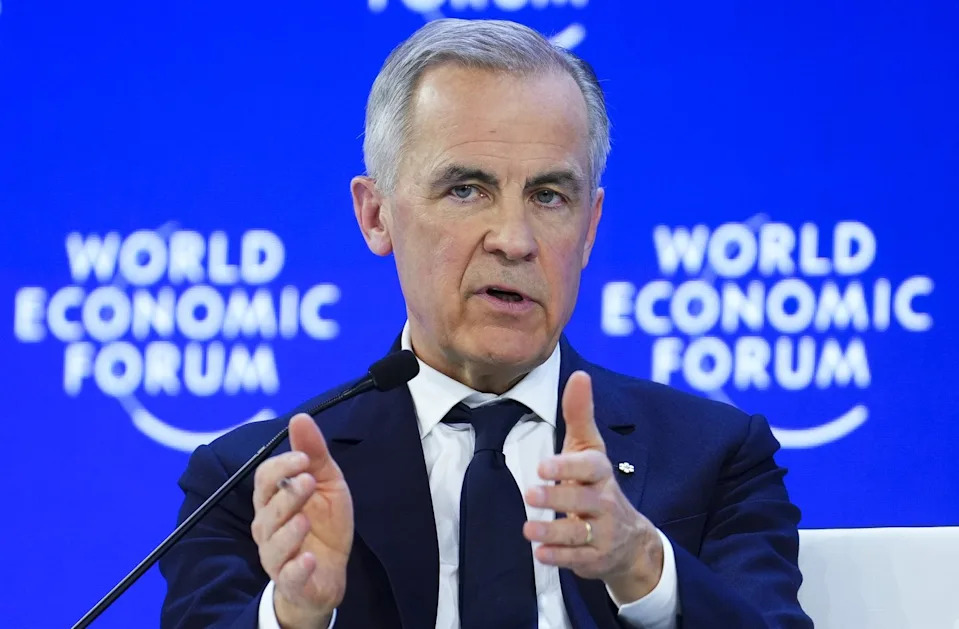
The book is not an easy read. Perhaps if you were educated in Economics you would breeze through it, but as a newbie in that field, I had to force myself to concentrate on where the arguments were going. Having said that, I’m happy that I’ve completed the read. If nothing else, it has convinced me that we are fortunate to have this guy at the helm in these troubled times. I watched Carney’s brilliant speech at Davos as I was writing this, and it reminded me of his book – how logically he carries an argument to the conclusion. The speech was also reminiscent of the book in its breadth of vision, of world view. Both the book and the speech have given me a lot more appreciation of the science of economics, and impressed me with the “rock solid” feel of Mark Carney.
The book is written in three parts. The first part deals with market societies. It’s a fairly theoretical and historical discussion of how monetary systems were developed. It tracks from the dawn of civilizations to the development of digital currency. The curious thing about money is that it is hard to define what money really is. It is no longer representative of your share of some huge pile of gold that’s maintained by the central government. Instead, it’s something of an act of faith in a system driven by a collective of central banks. And that act of faith is integral to the system and must not be subverted. “For money to be sound, it must be trusted. It must hold its value and be part of a financial system that maintains confidence by being resilient to shocks.” As to the future development of alternative currencies like stablecoins and CBDC’s, Carney doesn’t rule them out, but considers that “the terms of engagement for innovations in payments and currencies must be adopted in advance of any launch.”
Beyond the architecture of a monetary system, however, the author delves into the reasons why our unfettered marketplace isn’t delivering the outcomes that society desire. “Market-based economies have generally relied on a basic social contract comprised of relative equality of outcomes, general equality of opportunity, and fairness across generations.” He postulates that this social contract is breaking down. Inequality is rising sharply – rich are getting richer, poor are getting poorer and the middle class is disappearing. And he begins to develop that dominant theme about finding ways to make the marketplace drive the things that matter.
The second part of the book examines, from a deeply involved economist’s point of view, three major perturbations of the financial system. They represent the kind of shocks against which the monetary system needs to be resilient. And from looking at those events, he derives lessons about how we must adapt the economic system to deal with the future. Those perturbations were brought on by i) the global financial crisis of 2008, ii) the climate crisis, and iii) the Covid pandemic.
The section on the financial crisis is really interesting. If you’re like me, you remember the bankruptcy of Lehman Brothers and the market collapse of Fanny Mae and Freddie Mac shares. (These last two entities were US government sponsored enterprises (GSE’s) that were intended to energize the US real estate market and generate lots of low-cost housing). I remember the bail-out of General Motors and of Chrysler Corporation by the Canadian and US governments and I remember the ridiculously low price of houses in certain US markets like Florida and Arizona which many Canadians saw as exciting opportunity. But despite being aware of a market disruption, I don’t think I ever thought of it as a crisis, probably because it didn’t affect me personally very much.
Carney saw it quite differently. In 2007, he was in a senior position at the Bank of Canada, under then-governor David Dodge. He became aware that Canada’s asset backed commercial paper (ABCP) market was over-extended. In August 2007, “the Canadian ABCP market was around $32B in size. The assets broadly matched liabilities, but the market was growing nervous because some of the assets were US sub-prime loans.” So they started digging into the “how bad can it be?” question. The answer was “real bad”. Because ABCP’s had been used as collateral for borrowing, “Investment banks on London were holding Canadian “insurance” on more than $200B in total credit exposures….and they were dwarfed by structures in the UK, Europe, and the US.” He describes the effort to recapture sanity in the market as “eighteen months of constant brinkmanship…. At the darkest moments over the next eighteen months, it looked like the investors might receive only 20 cents per dollar invested, whereas in the end they received more than 90 cents…from that August long weekend on, I lived with a sense of foreboding. The global securitization and derivative markets were dead men walking. Collectively they could bring the entire financial system down. And eventually they would.”
He talks about reasons why it happened. One of the major reasons is that bankers’ compensation was linked to how much money they could lend, and so caution went out the window. The world of finance, he says, “lost track of its core values of fairness, integrity, providence and responsibility”.
The G20 subsequently created a Financial Stability Board which was charged with establishing standards of conduct to regulate the banking systems and restore stability to, and faith in, the monetary system. And that resurrected financial system would soon be tested by the next major crisis, the Covid pandemic.
The Covid pandemic shouldn’t have come as a surprise. People were telling us that a new pathogen was almost overdue. In 1999, WHO urged governments to create a national pandemic planning committee and take responsible actions, and in 2006 epidemiologists published a study showing that a modern pandemic could kill 50 to 80 million people. Before they were controlled, the SARS and Ebola virus eruptions killed over 11000 people, and these should have served as a warning. There was some lip service response to the WHO calls for preparedness, in that by 2018, over 100 countries had carried out pandemic evaluations in response to WHO guidelines.
However, despite all of that, when Covid struck “not a single country had their plan fully financed or implemented”. In Canada, personal protective equipment stockpiles were insufficient for even a full week of Ontario’s demand, and the Public Health Agency didn’t have target equipment levels nor did they have an accounting of how much equipment was available.
Carney attributes this lack of preparedness to what he calls a failure to value resilience. This theme occurs repeatedly through his book – that we must anticipate and prepare for failure. You’d like to prevent disease from happening, but are we ready if a pandemic hits? You’d like to keep global temperature increase below 1.5 degrees, but are we ready for severe weather consequences if we don’t?
People, and politicians in particular, generally display a bias for the present and discount problems from the future. It is rarely in a government’s interests to be really far-sighted. They care about the next election, not a pandemic that might arise sometime in the next hundred years. And so, we don’t prepare.
In tune with his premise that the marketplace needs to reflect what we really value, he writes “by converting lives to dollars in a cost benefit analysis, we end up selecting the option that maximizes wealth and therefore consumption, but not necessarily welfare.” As an economist, he sees the pandemic as a disrupting force for global supply chains, with calculable impacts like a quarter million deaths and a 20% drop in GDP in the UK (where he was employed at that time). But he sees more than just the economics. He sees the flaws in decision making matrices that formed policy in different nations, and he sees an unfortunate intergenerational aspect of fighting Covid – that most of the benefit went to the vulnerable old, and most of the cost will be borne by the working young.
From the Covid crisis he distills the need for five key values or attributes of our society – solidarity, responsibility, sustainability, fairness, and dynamism. If we work together responsibly and dynamically for a fair and sustainable economy, we can prosper. And if we put enough value on resilience, on being prepared for the next pandemic, the next wildfire season, the next foreign war that disrupts supply chains, we can remain prosperous. I would anticipate that if Carney remains Prime Minister for any extended period of time, you will see significantly increased investment in preparedness agencies.
After Covid, he turns his attention to the climate crisis. I’ll try to keep this brief.
- He firmly believes that climate change is real and not junk science as some orange-hued world leaders would suggest.
- He is very sympathetic to Greta Thunberg’s accusation that current generations are creating a mess that future generations are going to be stuck with. “Climate change is the tragedy of the horizon – imposing a cost on future generations that the current generation has no direct incentive to fix.
- “What gets measured gets managed” is a business management aphorism. Following COP 21 in 2015, reporting standards were developed by the Task Force on Climate Related Financial Disclosures (TFCD). Adoption of those reporting standards has been fairly rapid among large companies, but the quality of reporting is still rather spotty. Carney advocates for making TFCD reporting mandatory as a necessary first step in really managing emissions.
- Climate change is a long-term problem and government action is required to establish the right economic reaction. “Given the multi-year nature of the transition, it is essential that climate policies are as credible and predictable as possible.”
- Yes, carbon pricing is a key requirement of climate action. “Meaningful carbon prices are a cornerstone of any effective policy framework.” Why then, you might ask, did Carney kill the consumer carbon pricing of the Trudeau government? The book doesn’t answer that question, because the book pre-dates that decision by three years, so I’ll answer it for you. He killed it because Poilievre with his simple-minded slogan-based attacks had succeeded in making a good policy extremely unpopular and Carney had to scuttle it or lose the election. Remember though, that the consumer price on carbon had about a quarter or a third of the impact that the industrial pricing scheme did, so not all was lost. And I predict that Carney’s government will, at some time, get more aggressive on carbon pricing.
- Technological change will be needed. A greener grid. A much larger and robust grid. Increased use of hydrogen as a fuel (I’m a big advocate). Investments in carbon sequestration.
- A significant place at the table for the insurance industry. “General insurers and reinsurers are on the front line of managing the physical risks from climate change.”
- And finally, “the transition to a green economy can be the greatest commercial opportunity of our time.” As always, inside every crisis, every challenge, there is opportunity.
In these chaotic times, with Trump, Putin and others causing such chaos, the battle against climate change has rather lost momentum. I have been concerned that Canada’s climate change policies were taking a step backwards. After reading this book, I am reassured that the Prime Minister has a better grip on this issue than anyone else I’ve heard discussing it.
That brings us to Chapter 13, entitled Values-Based Leadership. As I read this chapter, I found it hard to believe that he didn’t write it with Donald Trump in mind, because he pretty much describes everything that Trump isn’t. Of course, maybe he wrote it thinking about Trump’s first term.
I’m simply going to capture a few bullets from the book and let you ask yourself how the orange idiot would look against this as a scorecard.
- Improved transparency…differentiating facts from falsehood (not shouting Fake News!!)
- Establish the facts. (Or lie reflexively, as if you’d rather lie than breathe).
- “trust those who seek the truth, but doubt those who say they have found it”
- “Leadership is the acceptance of responsibility rather than the assumption of power.”
- “Recognize that all leadership is temporary…take a cue from Cincinnatus and Washington and leave before you are asked (remember January 6th?).
- “The quest for power over others quickly becomes dangerous, especially if it is divorced from moral authority (Trump is all about his quest for power – and narcissism, racism, misogyny, paedophilia, lying and kleptomania don’t count as moral authority”.)
- “No discussion of leadership should overlook the importance of competence. Plan beats no plan, but a plan well executed is best of all. (perhaps not what DOGE was famous for).”
- “Leaders need to be humble about success and honest about failure.” (I want my Nobel prize! I deserve my Nobel prize!)
- Define your purpose and stick to it obsessively.
- Select your teams wisely and recognize that while diversity is reality, inclusion is a choice. (Hello Pete Hegseth, Fox news blowhard and drunk – how about taking responsibility for the world’s greatest military force?)
- We must all resist the slide into a post-truth society. (Tell the big lie over and over and people will believe you)
- Good leadership isn’t just effective, but ethical. (Release those Epstein files. Let’s monetize the presidency – should be able to make a few billion in four years, right?)
That chapter on leadership is 35 pages long, and I’ve handed you just a few snippets. But apart from Trump contrast, the impact on the reader is to tell you that our PM has reflected deeply on leadership and truly analyzed what he needs to do to be effective. He may or may not succeed, but the fact that he has internalized what leadership is gives him a much better chance of succeeding.
As this book draws to its final chapters, Carney has left the UK and is back in Canada, and it is clear that he has begun to think of things from a very Canadian perspective. He talks about the failure of 40 years of globalization and technological advances – that they have resulted in “low wages, insecure employment, and striking inequalities…. Employment growth has been strongest at the high and low skilled ends of the job spectrum, resulting in the hollowing out of mid-skilled employment.” He sees the onset of “the 4th Industrial revolution” as a significant challenge because it will “mercilessly destroy jobs and livelihoods well before new ones emerge”.
The book, copyrighted in 2021, provides a clear insight into the November 2025 budget. “Both fiscal consolidation (reducing deficits) and a shift from current to capital spending (investing in the future) are questions of economic welfare and intergenerational fairness.” Although the budget hasn’t gone far towards reducing deficits yet, the sentence quoted above tells me that the now-centrist Liberals are going to be less interested in social safety net spending and more interested in infrastructure. And that’s probably a good thing. Infrastructure improvement is one of the keys to improving Canada’s failing productivity.
He lays out a ten-point plan for Canada which I would summarize as a strategy for the infrastructure, governance, training, and financial sector guidance to carry out a transition to a net-zero economy. It’s a big, long-term, visionary approach. He acknowledges that the transition will not be without pain. But he has, at least, a view for how we break out of the long slow productivity decline that we’ve been in for the last quarter century. Transition to net zero – and transitioning before the rest of the world gets there – is a key element of that strategy.
Don’t bother reading this book if you’re just looking to entertain yourself and kill a little time. It’s not a light read. But if you’d like to get a good handle on how a capitalist marketplace, guided by government policy reflecting the values of our nation, can deliver prosperity for Canadians, then it’s well worth your time. As for Mr. Carney – I was a fanbefore I read the book, but I’m a believer now.
5 responses to “The World View of Mark Carney”
Thanks Dennis, all good to know
Thanks, Dennis for taking the time to both read and digest Carney’s book and distilling its substance for us. While it makes me feel better about Canada’s leadership in an era of crisis and chaos, it also confirms my pessimism, since the world is denying or contradicting the two main premises that I take from your summary: the need for collectivism and preparedness on multiple fronts both within Canada and globally. Politics are part of the equation, but so, of course, is capitalism, which has contributed a great deal to human development, but is essentially driven by the desire to maximize profit, i.e. greed. That part may still need some work.
Greetings Ed, and thanks as always for the comment. Let me try to address those three items individually, starting with collectivism. I think that Carney addressed collectivism strongly in his Davos speech when he said “But more recently, great powers have begun using economic integration as weapons. Tariffs as leverage. Financial infrastructure as coercion. Supply chains as vulnerabilities to be exploited.” Carney says the rules-based international order is gone. We cannot become overly reliant on supply chains from high-risk sources, nor on single-source trade for vital commodities. But collectivism is extremely important for the middle powers. “Middle powers must act together because if we’re not at the table, we’re on the menu.” Collectivism is what will pull us through this.
Preparedness on multiple fronts is what I think Carney would call resilience in his book. Interestingly, that doesn’t just apply to Canada being resilient. He first talks about resilience in the context of the international monetary system. I would hazard a guess that one of the grave dangers of the great powers deciding to “abandon even the pretense of rules and values for the unhindered pursuit of their power and interests” (quoted from the Davos speech) is the threat to the stability of the international monetary system. Trump’s pressures to gain personal control over the Fed is a threat because the American dollar is still the predominant currency for international trade. The recent trend, however is that other currencies are gaining ground, and that might be a good thing. Diversity may be a good thing here.
In the book Carney talks about preparedness, resilience, as founding elements of systems of management. So the monetary systems has to have internationally accepted rules about the relationship between borrowing and reserves, and the capital market system has to have a way to build climate risks, and pandemic risks etc. into corporate finance documents.
I think it’s not the world that’s denying or contradicting the need for collectivism and preparedness. I think it’s the great powers. The Russians by exercising their military might, the Americans and the Chinese by “using economic integration as weapons”. And Carney advises that collectively the middle powers can resist those pressures and restore some sense of international order.
And now finally, about capitalism. I think that capitalism is to economy as democracy is to Churchill’s view of government – the worst form of government (economy) except for all the others.
Carney advises us in the book that capitalist driven globalization has failed us. He talks about wealth and income inequality, the hollowing out of the middle class, the lack of intergenerational fairness, and what he calls “the tragedy of the horizon” which is the failure of capitalists (and politicians) to have due regard for what lies beyond their short-term horizon. Having said all that, he does not seek to abandon capitalism. He seeks to revise how it’s used. And this is the basic premise of the book – that the market will only deliver what we value if we force it to. We need to put a value on our values.
Carney deals directly with your assertion that “capitalism… is essentially driven by the desire to maximize profit, i.e. greed.” I think he agrees that profit-taking is at the heart of capitalism’s failures, but he argues that it doesn’t have to be that way. Leaders, he says, must “define your purpose and stick to it obsessively”. Historically, when it was difficult to get a charter as a corporation, corporations were established to achieve some over-arching objective, and profits were secondary to that objective. In time, as corporations became traded entities and ownership diverged from powerful families to millions of individual stockholder, profits became more important – more valued. Carney quotes another economist, John Kay, who wrote “Profit is no more the purpose of business than breathing is the purpose of living.” But he does acknowledge that just as breathing is vital to living, profits are important to the delivery of purpose.
He works through an argument about ownership of corporations and concludes that the stockholder doesn’t have traditional ownership rights. Legal cases have been fought over whether a corporation was required to distribute profits to the stockholder, with the decisions empowering Boards of Directors to pursue other objectives over and above pure profit taking. And here is where the book’s title come into play. Capitalism can work for us all if profit is only one of the things that and a company and a country work for. It is valid for a company to have objectives that include stakeholder outcomes and not just shareholder outcomes. Building values into corporate purpose allows the market to drive social outcomes. He talks about the development of “ethical” investment and “green” investment pools and shows that these are maturing into strongly competitive profit-sharing businesses.
I think we can foresee Carney using government power to nudge companies gently towards social outcomes. I think government has two tools at their disposal. The first is establishing rules and regulations that drive business to achieve desired social outcomes. For example, maintaining carbon pricing rules will drive climate control objectives. And second is direct government involvement in doing things that the country needs but individual companies cannot provide – like perhaps massive infrastructure investment in new electrical grid and/or widely available cheap broadband services.
You should read this book Ed. As a historian you will admire, I think, the scope of Carney’s overview on the subject.
Excellent!! Read the book about a year ago and struggled to get through it. Lent it to two other readers who never completed the journey. What I failed to recognize on reading was how relevant it would become. I jot these comments sitting her in Santigo Chile, a society still in constant turmoil to put itself together with decades of struggle through political leadership the balance of the western hemisphere is trying to grapple with now. We can all learn from a Carney example.
Thanks for the comment Dan. How’s Chile? For how long will you be enjoying Chilean cuisine? Would that include any Chile con Carney?
I’m glad that I wasn’t the only one who struggled to get through it. I really think that what I ought to do now is to sit down and read it again. Not because Carney is now our Prime Minister, but because the book gave me a new appreciation of what it is to see world events as elements of a macro-economic process. I think I might get a lot more out of a second reading.